PrimaLuna: The Accessible Gateway to a World That Genuinely Changes People
PrimaLuna is a different kind of story. Founded in the Netherlands in 2003 by Herman van den Dungen, and built in China (which is how they achieve their price points without cutting corners on the things that matter), PrimaLuna has spent twenty years doing one thing very well: making valve amplification accessible, reliable, and sonically exceptional at prices that don’t require a second mortgage.
The EVO range covers a wide spread of budgets and configurations. At the entry point, the EVO 100 Tube Integrated Amplifier comes in at £2,750 — a genuine, full-fat valve integrated with everything that entails. Step up to the EVO 200 Tube Integrated Amplifier at £3,350 and you gain a larger tube complement and a slightly more authoritative presentation. The EVO 300 Tube Integrated Amplifier at £4,600 adds triode switching mode — more on that in a moment — and the flagship EVO 400 Tube Integrated Amplifier at £5,650 represents the fullest expression of the PrimaLuna integrated concept.
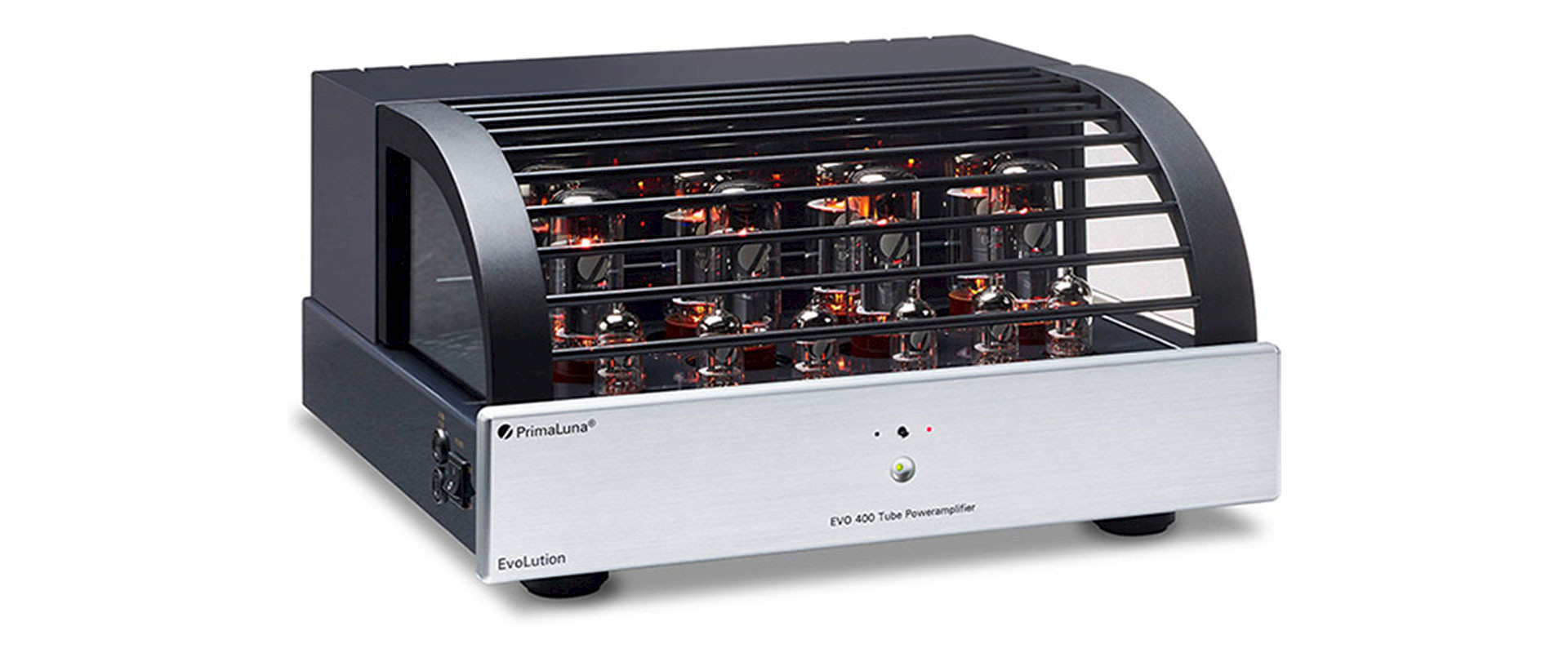
If you prefer separates, the range extends to matching pre and power combinations. Pre-amplifiers run from the EVO 100 Tube Preamplifier at £2,498 through the EVO 200 Valve Preamplifier at £3,350, up to the EVO 400 Tube Preamplifier at £5,350. Power amplifiers cover the EVO 100 Tube Power Amplifier at £2,750, the EVO 200 Tube Power Amplifier at £3,350, and the EVO 400 Tube Power Amplifier at £5,350.
There’s also the EVO 300 Hybrid Power Amplifier at £6,498 — a valve input, solid-state output design that delivers 100 watts into 8 ohms, bridgeable to 220 watts in mono. If your speakers are genuinely difficult loads, this is the PrimaLuna to talk to us about.
The Technology That Separates PrimaLuna from the Competition
The feature that makes PrimaLuna genuinely different from most valve amplifiers at similar prices is Adaptive Auto-Bias — a circuit that continuously monitors and adjusts the bias of each output valve automatically, without any input from the owner.
Why does this matter? Valve bias drifts over time as tubes age, and in a conventional amplifier you’d need to check and adjust it periodically with a multimeter. Skip that and sound quality degrades. Do it wrong and you can damage the amplifier. PrimaLuna removes that entire concern. The system also includes a Bad Tube Indicator — individual LEDs that identify a failing valve before it can cause damage to the output transformers. In practice, this means you can buy a PrimaLuna, live with it for years, and the only maintenance you’ll ever do is replace valves when the indicator tells you to.
The EVO 300 and 400 integrateds also offer switchable operating modes — ultralinear and triode — accessible via the remote control. Ultralinear gives you full rated power; triode mode roughly halves that but adds a textural richness and intimacy that many listeners prefer for acoustic music and late-night listening. Being able to switch between the two without touching the amp is genuinely one of the more enjoyable aspects of long-term PrimaLuna ownership.
What to Expect Sonically
PrimaLuna amplifiers don’t sound like the valve amplifiers of myth — soft, warm, slightly blurry, better suited to jazz in candlelight than anything with energy or drive. Modern valve circuit design has moved on, and PrimaLuna’s execution reflects that.
The treble is clean and extended — sparkly, without ever becoming harsh. The midrange is where PrimaLuna earns its reputation: voices are vivid, present, and textured in a way that solid-state designs at the same price rarely match. There’s an organic quality to the sound — a naturalness to how instruments decay and breathe — that’s difficult to describe but immediately obvious when you hear it.
Bass on the EVO range is fuller and warmer than a neutral solid-state amplifier at the same price, which suits a great deal of music very well indeed but is worth knowing if your system is already bass-heavy. The 8-ohm and 4-ohm speaker taps give you some room to adjust the tonal character depending on your speaker’s impedance — use the 4-ohm tap with a nominal 8-ohm speaker for a slightly tighter, more controlled bottom end if needed.
The Realities of Owning One
PrimaLuna amplifiers are heavier than they look. The EVO 400 integrated is close to 32kg. Plan accordingly for placement and make sure your rack is up to it.
The valve cage is included and, unlike most, is worth keeping on — particularly if you have children or pets nearby. The build quality throughout is genuinely impressive for the price; point-to-point wiring, Takman resistors, ALPS Blue Velvet volume pots, Swiss-made silver-plated OFC internal wiring.
Tube rolling — swapping out the output valves for alternative types — is a real part of the PrimaLuna ownership experience, and the Auto-Bias system makes it safe and simple. The EVO range accepts EL34, KT77, KT88, 6CA7, and 6550 output valves, each with its own tonal character. This is either a rabbit hole or an adventure depending on your disposition, but it’s genuinely one of the more enjoyable aspects of living with these amplifiers long-term.
The Rumours, and What’s Actually True
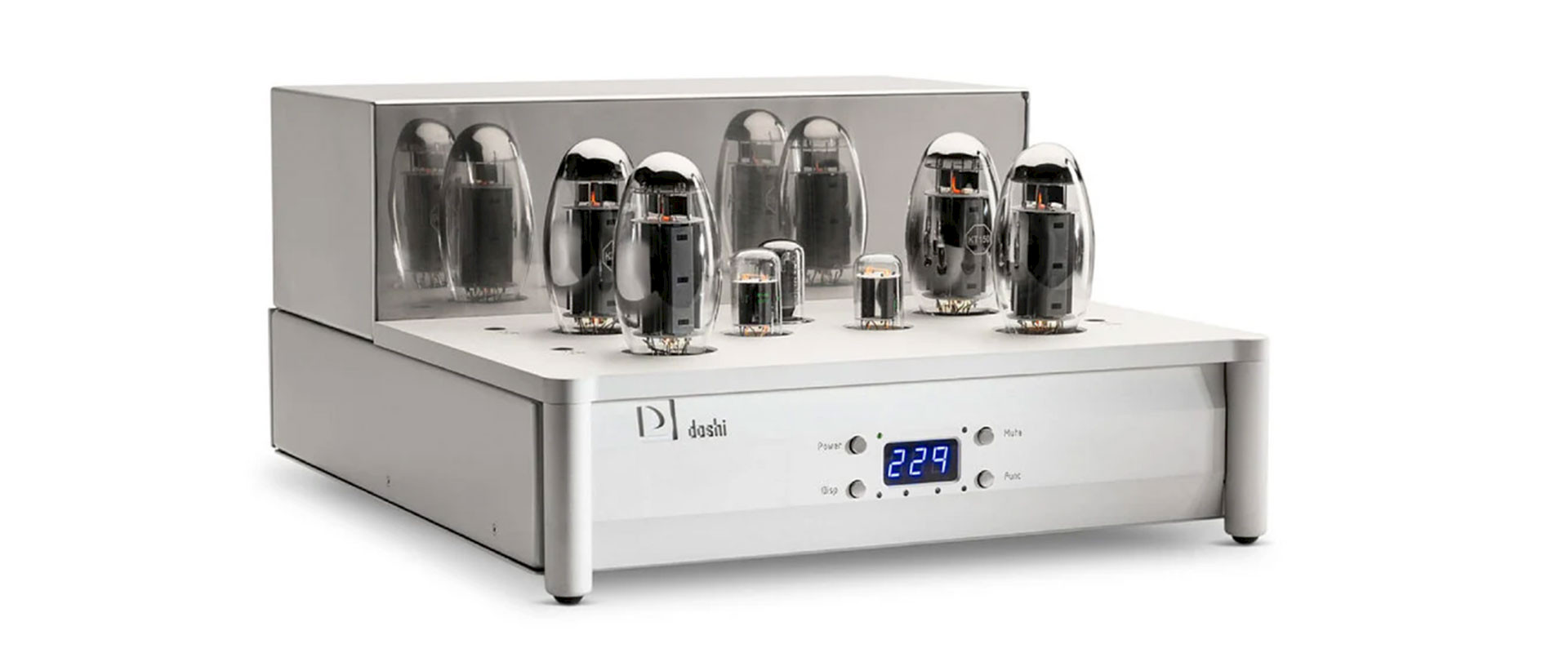
“Valve amplifiers are unreliable.” Not these ones. Doshi’s broadcast-engineering philosophy means everything is over-specified for long-term reliability. PrimaLuna’s Auto-Bias system and Bad Tube Indicator take most of the risk out of the equation entirely. Both brands are designed for longevity.
“Valves are too warm and coloured.” Neither of these brands sounds like that. Both are tonally richer than most solid-state at similar prices, but neither smears or blurs the music. Doshi in particular can sound startlingly clear and dynamic.
“You need efficient speakers.” PrimaLuna’s EVO range at 40–70 watts is genuinely capable of driving most real-world speakers. The EVO 300 Hybrid Power Amplifier at 100 watts takes that further still. The Doshi Evolution Monoblocks have enough drive for demanding loads. Neither brand requires horn speakers to perform.
“Valve amps are a faff to live with.” PrimaLuna has largely solved this with Auto-Bias. Doshi requires slightly more engagement — tube rolling, break-in — but nothing beyond the capability of any interested owner.
Which One?
If you’re new to valve amplification and want something that rewards long-term ownership without demanding expertise, PrimaLuna is one of the most convincing entry points in the market. At every level of the EVO range, you get a product that’s been genuinely thought through — not just as a piece of engineering, but as something you’re going to live with for years.
If you’re looking for a reference-level valve amplifier that you genuinely don’t want to replace — one that competes with the very best regardless of technology — Doshi is worth every conversation it takes to get there. Nick Doshi has spent his life building equipment that reveals what music actually contains. The Evolution series is the current culmination of that.
Both are worth hearing. Both are in stock at Martins. Come in, or get in touch — and findout what your music has been hiding.