
The QUAD Platina CDT: Why Your CD Collection Deserves a Proper Transport
The QUAD Platina CDT: Why Your CD Collection Deserves a Proper Transport
Reports of the CD's death have been greatly exaggerated. In the UK, CDs continue to outsell vinyl — quietly, without the fanfare that vinyl generates, but consistently. Millions of people still own substantial collections, and for good reason: a well-mastered CD, played on the right equipment, sounds exceptional. The question is what "the right equipment" actually means in 2026.
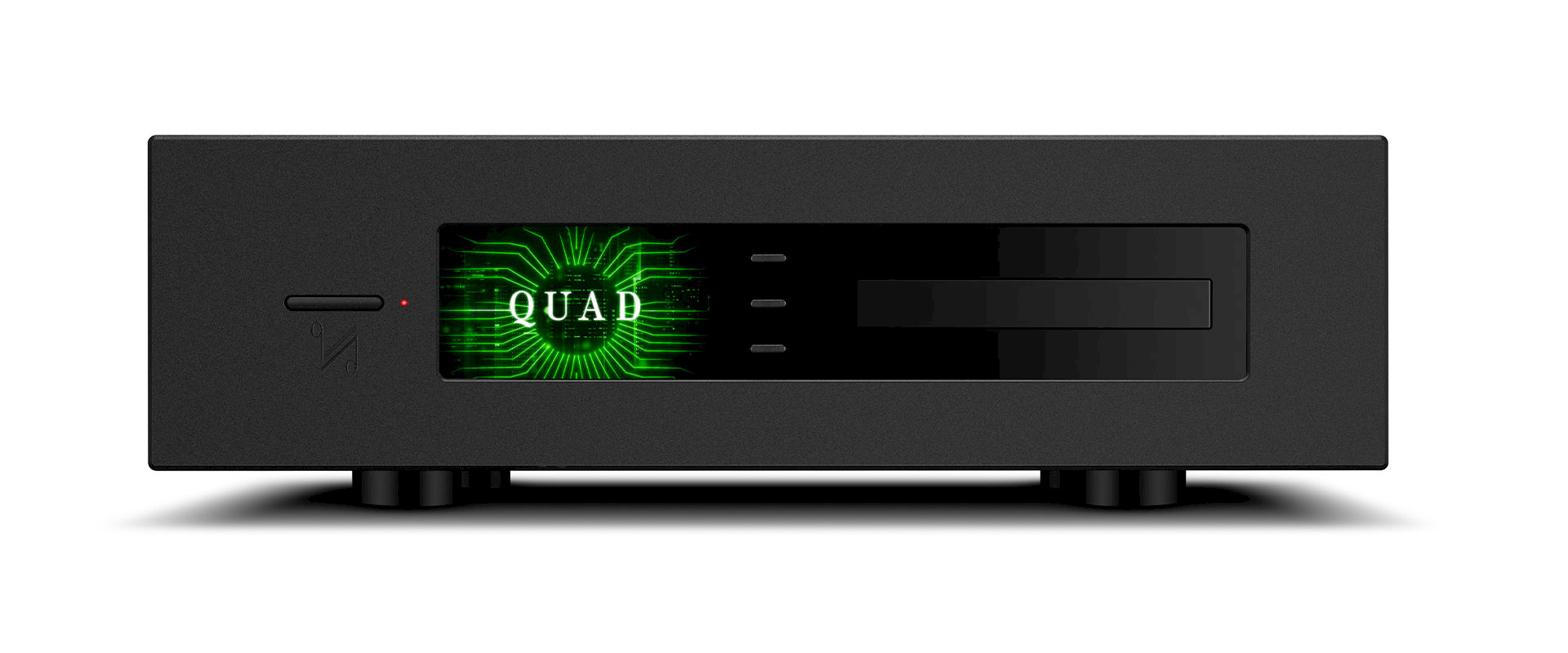
QUAD's answer, launched in March 2026, is the Platina CDT — a dedicated CD transport at £1,499.95 and the third component to complete the Platina range. It is not a CD player in the conventional sense. There is no internal DAC, no analogue output stage. What it does is extract digital audio from a disc and deliver it — with precision, stability, and as little electrical contamination as possible — to an external DAC. That distinction matters more than it might initially appear.
Transport vs Player — Why the Distinction Matters
A standard CD player combines two functions in one chassis: transport (reading the disc and converting optical data to a digital bitstream) and digital-to-analogue conversion. The convenience is obvious. The problem is that a spinning motor, a laser sled, and the servo electronics driving them generate continuous electrical noise inside that chassis. The DAC, sharing the same environment, works harder to do its job cleanly. Even with good internal shielding, some contamination is inevitable.
A CD transport separates these two functions. The transport reads the disc and outputs a digital S/PDIF signal — coaxial or optical — to an external DAC. The DAC operates in its own clean environment, whether that is a standalone unit, a network amplifier with digital inputs, or an integrated amplifier with a high-quality DAC stage built in. The transport's job is purely mechanical and digital. This separation is the fundamental engineering argument for the approach, and it is why serious hi-fi systems have used dedicated transports for decades.
The cleaner the signal the transport delivers — in terms of both data accuracy and timing stability — the better the DAC performs. Everything downstream benefits.
The Platina Range Context
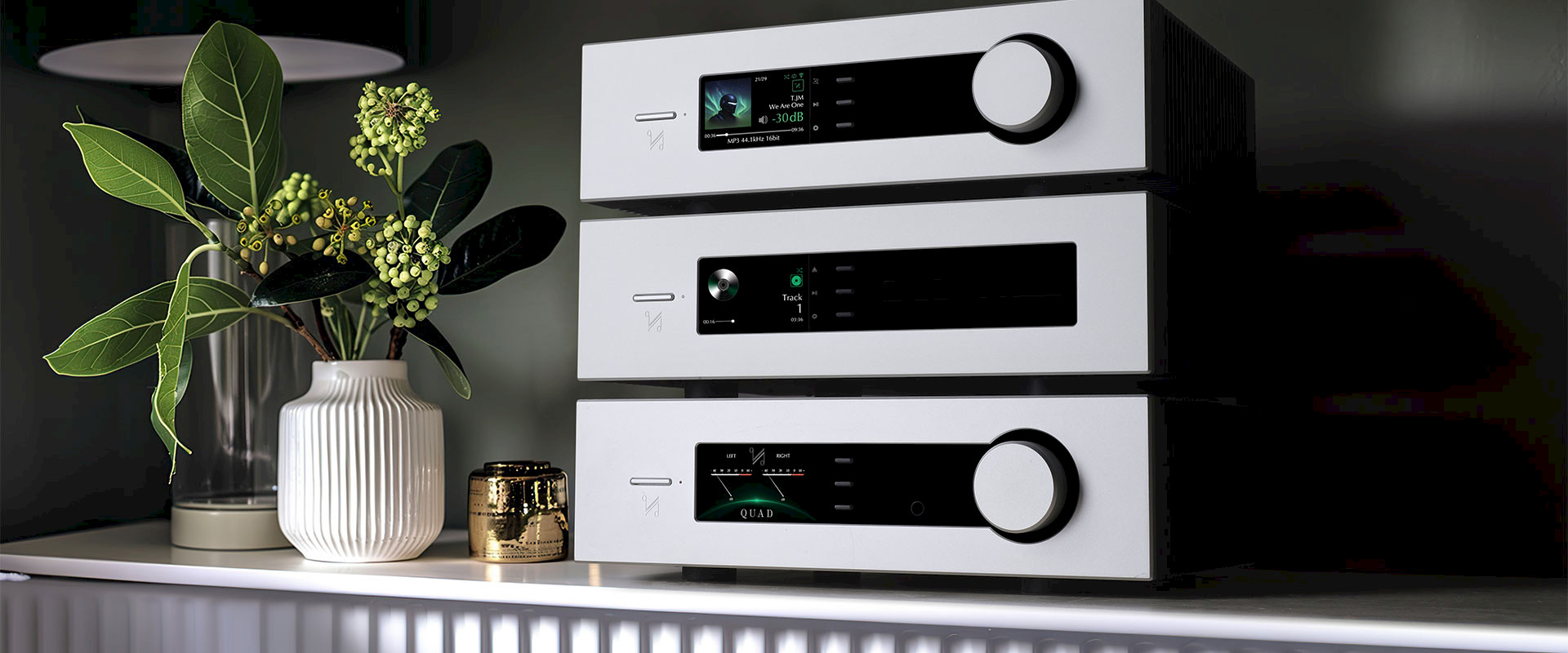
The Platina CDT at £1,499.95 completes a three-component range. It sits alongside the Platina Integrated (£3,499.95) and the Platina Stream (£2,999.95). All three share the same chassis design, the same 4.3-inch IPS LCD display, and the same engineering philosophy. Together they form a complete source stack: the Stream handles network streaming and digital libraries; the CDT handles the physical collection.
The natural destination for the CDT's digital output is the Platina Integrated, which has an ES9038Pro DAC built in. Feed the CDT into the Platina Integrated via coaxial or optical and the ES9038Pro — a high-performance DAC chip widely used in reference-level equipment — receives the CDT's precisely clocked output and handles the conversion. The result is a coherent, well-matched system with a unified aesthetic and shared engineering DNA.
But the CDT is not a system-exclusive component. Its coaxial and optical outputs work with any quality DAC, any network amplifier or integrated with digital inputs. It is a serious transport first and a Platina system component second. If you own a well-regarded standalone DAC and want a proper front end for your CD collection, the Platina CDT is a viable option regardless of what else is in your rack.
The Mechanism and Servo System
The CDT uses a high-end mechanism specifically selected for build quality and disc stability. This matters because the mechanism is where it all starts: the disc has to spin consistently, the laser has to track accurately, and the servo system has to manage all of this with minimum electrical noise feeding back into the signal path.
QUAD has paired the mechanism with a custom-designed servo control system and a dual-core processing framework. The goal of this arrangement is to retrieve data cleanly and accurately, minimising the need for error correction. Error correction is not free — every interpolation or concealment introduces its own artefacts. A transport that reads more accurately simply has less to correct, and that shows in the sound. The Platina CDT handles standard Red Book discs (16-bit/44.1kHz) as well as CD-R, CD-RW, and data CDs.
Precision Timing — The TCXO
Every digital audio system is governed by a clock. The clock determines when each sample is read, processed, and output. If the clock drifts — even by microscopic amounts — the timing of the digital signal becomes unstable. This instability is called jitter, and its audible effects are well documented: smeared transients, less stable imaging, a flatness that drains the music of its sense of pace and energy.
Standard crystal oscillators are vulnerable to temperature variations. As the component warms up during use, its resonant frequency shifts slightly. In a high-performance digital source, this is not acceptable. The Platina CDT uses a TCXO — a Temperature-Compensated Crystal Oscillator — as its master clock. A TCXO monitors its own operating temperature and applies a correction to maintain frequency stability across the full operating range. The result is a clock reference that does not drift as the unit warms up, and does not vary with ambient temperature changes in the room.
More importantly, the TCXO in the Platina CDT is powered by its own independent ultra-low-noise linear regulator with a dedicated grounding scheme — completely isolated from the electrical noise of the transport mechanism. It is not just that QUAD has fitted a better oscillator; they have ensured it operates in conditions that allow it to perform to its potential. The low-jitter S/PDIF output this produces gives the connected DAC the best possible signal to work with.
Power Supply Architecture
The Platina CDT is built around a Noratel toroidal transformer. Noratel is a Norwegian manufacturer with a specific focus on high-quality transformers for premium audio and industrial applications — the kind of component that appears in the parts lists of serious amplifier and source designs, not budget equipment. Its selection here signals the level of engineering commitment QUAD has brought to the Platina CDT.
What matters as much as the transformer itself is how QUAD has distributed and isolated the power supplies derived from it. The motor and laser servo circuits — the noisiest elements in any CD transport — have their power supply entirely isolated from the decoder stage that processes the digital audio signal. The MCU and display have their own separate supply, kept clear of the signal path. The USB input has its own dedicated power supply. Even the TCXO runs from its own independent regulator.
The principle throughout is the same: electrical noise generated by mechanical and control systems must not be allowed to reach the S/PDIF output. In a less carefully engineered transport, it will. In the Platina CDT, each stage has been isolated specifically to prevent that contamination. This is precisely the kind of internal architecture that separates a serious transport from a budget one — not visible on a specification sheet, but audible in the result.
Hi-Res USB and Versatility
The Platina CDT is not solely a disc spinner. The USB-A port on the rear accepts USB storage devices and reads FLAC, WAV, WMA, AAC, MP3, and APE files at their highest supported resolution. For listeners who have accumulated hi-res downloads — 24-bit/96kHz or 24-bit/192kHz FLAC files from Qobuz or HDtracks — the CDT provides a dedicated, high-quality transport path for that material as well.
The USB input benefits from the same precision clocking architecture as disc playback, and from its own dedicated power supply. This is not a convenience feature bolted on as an afterthought — the engineering behind USB playback has received the same attention as the CD transport function. Whether you are playing a disc or a FLAC file from a USB drive, the signal arriving at the DAC is clocked and conditioned to the same standard.
Build and Design
The Platina CDT is built on a steel chassis with a thick aluminium front panel and anti-resonance feet. The anti-resonance approach is functional, not cosmetic: mechanical vibrations from the spinning disc and the tray mechanism are a real source of degradation in CD transports, coupling into the chassis and affecting the servo's ability to track accurately. The combination of the rigid steel chassis, the damped feet, and the high-quality mechanism addresses this directly.
The front panel carries the loading tray, a power button, three function buttons, and the 4.3-inch colour IPS LCD display. The display matches those on the Platina Integrated and Platina Stream — same wide viewing angle, same clean metadata presentation. For those building a Platina system, the visual coherence is a genuine pleasure; for those using the CDT in a different system, the display is simply well-executed and easy to read. Available in black or silver fascia.
Is It Worth It vs a Budget CD Transport?
QUAD also makes the Quad 3CDT (£599.00) — an affordable pure transport and a solid option for those moving up from a combined CD player. The Platina CDT at £1,499.95 is a different proposition: TCXO master clocking, a Noratel toroidal transformer, fully isolated power architecture across every stage, and an anti-resonance chassis engineered to a higher standard.
These are not marketing claims. Each one addresses a specific, documented source of degradation in digital audio reproduction. Whether the gap between the two is audible — and whether it is worth £900 — depends on the quality of the rest of the system and on how seriously you take the source. A well-regarded DAC in a resolving system will reveal the difference. A system at mid-fi level may not. That is an honest assessment, and it is the one we would give you face to face.
At £1,499.95, the Platina CDT sits in a relatively uncrowded space. There are budget transports, and there are very expensive ones. A £1,500 transport with a TCXO, a Noratel transformer, fully isolated power supplies, and a proper anti-resonance chassis is a serious piece of engineering at a sensible price.
Hear It in Norwich
The QUAD Platina CDT is available to hear in our Norwich showroom. We have been an authorised QUAD dealer since 1968 — a relationship that goes back to the Peter Walker era — and the Platina range is one we have followed with genuine interest. Call ahead and ask for Dave or Chris, who can set up a proper listening session with the Platina stack or with whichever DAC or amplifier is most relevant to your system.